
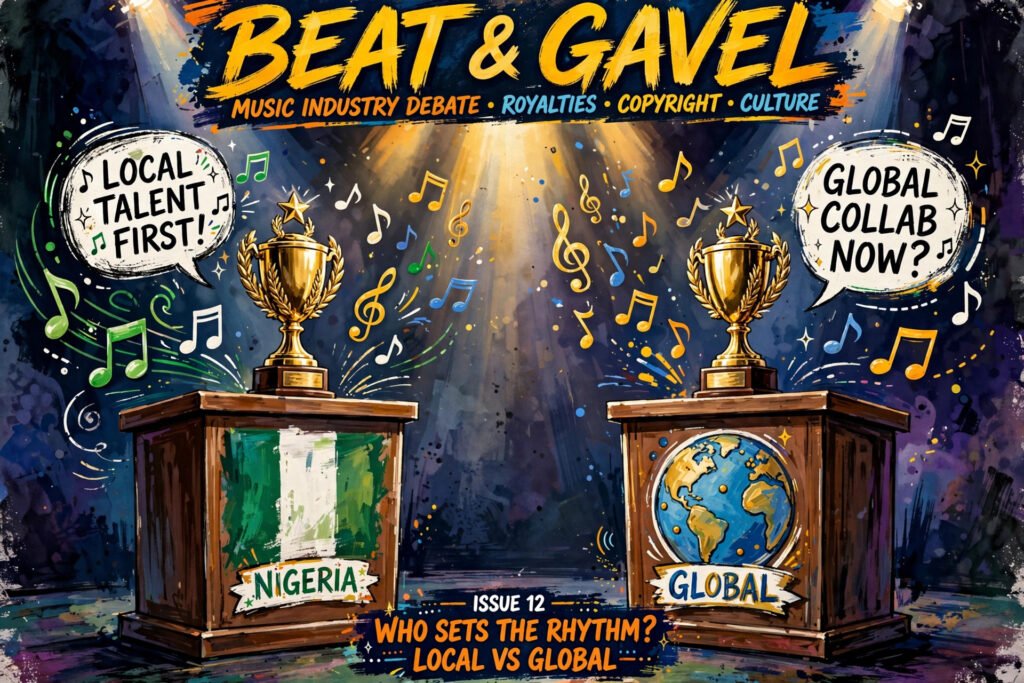
Ayo Animashaun Blasts Nigerian Artistes Chasing Grammys While Snubbing the Headies as Do2dtun Fires Back Over Toronto Move
The Nigerian music industry is in the middle of one of its most heated debates in years — and it started with an Instagram post. Ayo Animashaun, the founder and executive producer of The Headies, has publicly criticised Nigerian artistes who eagerly submit their work for Grammy consideration while allegedly refusing to enter the same music for Nigeria’s own biggest awards.
His comments, posted to his Instagram Stories on Thursday, October 15, 2026, have split the industry down the middle, drawn a sharp response from broadcaster Do2dtun, and reopened an old wound: does Nigerian music truly value its own institutions, or is everyone just chasing foreign validation?
What Animashaun Said
Animashaun did not mince words. In the now-viral post, he wrote:
“Tom, Dick and Harry will submit entries to foreign award bodies that don’t even care about them and proudly post about it. But these same people won’t submit their entries to the Headies, yet they’ll complain about not being nominated. Funny.”
The timing was pointed. His outburst came right in the middle of the submission window for the 2027 Grammy Awards, when several of Nigeria’s biggest stars — including Davido, Asake and Adekunle Gold, with Ayra Starr, Tems, Burna Boy, Rema and Victony also reported to have entered their projects — were publicly sharing their Grammy submissions on social media.
For Animashaun, the contrast was galling: artistes proudly announcing their entries to a foreign awards body, while the awards platform built specifically to honour Nigerian music struggles to get the same artistes to submit.
Standing by the Big Decisions
Animashaun’s post was not only about submissions. He also used the moment to defend some of the most controversial decisions in the recent history of The Headies — chief among them the plan to take the awards abroad.
“As long as those who benefit from what we do understand and appreciate it, the artistes understand why taking The Headies to the moon sometimes is the right move, and our sponsors see the vision, we can stand firmly by our decisions,” he wrote.
“Everyone is entitled to an opinion, but not every opinion carries equal weight. Posterity will be kind to those who see possibilities before they become obvious.”
It was a defiant posture from a man who has spent nearly two decades building the Headies into the premier recognition platform for Nigerian and African music — and who clearly feels that legacy is not being reciprocated by the artistes it celebrates.
The Postponement Backdrop
All of this is unfolding against a difficult backdrop for the awards. The 18th edition of The Headies, originally scheduled for October 23, 2026, in Toronto, Canada, has been postponed to April 10 and 11, 2027.
According to the organisers, the extension will allow them to expand activities across both Nigeria and Canada — workshops, seminars, industry engagements, and even a global trade and investment summit built around the awards.
But the postponement has also fed the criticism. For sceptics, moving Nigeria’s biggest music awards to Canada in the first place was already a hard sell; delaying it by nearly six months has only sharpened the questions about the direction of the platform.
Do2dtun Enters the Chat
It did not take long for someone to take Animashaun’s bait. Hours after the Instagram post, popular on-air personality Do2dtun took to X with a question that cut straight to the heart of the Toronto controversy:
“Have you ever seen them take the Grammys out of America before? Let’s start there.”
It was a simple, devastating comparison. The Grammys — the very foreign award body Animashaun was complaining about — have never left the United States. So why, Do2dtun implied, should Nigeria’s own awards leave Nigeria?
The post struck a nerve because it articulated what many in the industry have been whispering: that taking The Headies to Toronto looks less like ambition and more like abandonment.
The Visa Allegation
Animashaun’s response was explosive — and deeply personal. Rather than addressing the substance of Do2dtun’s question, the Headies founder accused the broadcaster of nursing a personal grudge.
“Are you sure this has nothing to do with the fact that I couldn’t help when you asked me to help you secure visa to the US using The Headies as an excuse?” Animashaun wrote on X. “You have my number, you can ask me questions directly.”
He went further, branding Do2dtun a hypocrite: “U criticise D Headies 4 goin abroad, yet slide into my DM asking me 2 help U attend Bcuz U want a visa. when I can’t help, U bcom even more bitter & criticize. So, is it really about Headies, or UR personal interests? Hypocrisy at its finest! Awards U didn’t attend in Naija.”
It was a remarkable escalation — turning a policy disagreement about where an awards show should hold into a public spat about visas, DMs and personal bitterness.
Why This Debate Keeps Coming Back
Strip away the personal drama, and the Animashaun-Do2dtun clash is really about a question the Nigerian music industry has never fully resolved: how should artistes balance international ambition with loyalty to home-grown institutions?
The case for chasing the Grammys is obvious. International recognition brings global visibility, bigger commercial opportunities and a stamp of approval that opens doors far beyond Nigeria. For artistes operating at the level of Davido, Burna Boy, Wizkid, Tems and Ayra Starr, the Grammys are simply where the biggest stage is.
But Animashaun’s frustration is also understandable. The Headies was created precisely to give Nigerian music its own credible, prestigious platform — so that artistes would not have to wait for foreign validation to be celebrated. If the biggest stars treat it as an afterthought while falling over themselves to submit to the Grammys, the institution is weakened from the inside.
The counter-argument, the one Do2dtun was making, is that institutions earn loyalty by the decisions they make. Moving the awards to Toronto — however well-intentioned the global-expansion logic — makes it harder to argue that artistes owe the platform unquestioning allegiance.
The Industry Reacts
As the exchange ricocheted across blogs and social media through the weekend, industry watchers lined up on both sides. Some backed Animashaun’s core point: that Nigerian artistes should support Nigerian institutions with the same energy they bring to foreign ones. Others sided with Do2dtun: that you cannot take the Headies out of Nigeria and then complain about a lack of patriotism.
What nobody disputed is that the conversation matters. The Headies remains the most important awards platform in Nigerian music, and its health affects everyone in the ecosystem — from the A-list nominees to the behind-the-scenes songwriters, producers and engineers the awards also honour.
The 2026 Race Caught in the Crossfire
The irony of the timing is hard to miss. While Animashaun was lamenting artistes’ disengagement, the actual 2026 Headies race was shaping up as one of the most competitive in years.
The Best Male Artiste category alone reads like a who’s who of Afrobeats: Wizkid, Burna Boy, Davido, Asake, Rema, Adekunle Gold — plus Fola and Mavo carrying the flag for the new generation. Adekunle Gold arrived with his 2025 album Fuji and singles like “Many People” and “I’m Not Done” keeping him firmly in the conversation. Davido was even added to the nominee list in an update by the organisers after the initial announcement.
That is eight of the biggest names in Nigerian music competing for one honour — precisely the kind of star-powered contest that should be the Headies’ greatest advertisement. Instead, the conversation around the awards has been dominated by postponement news and public spats.
It raises an uncomfortable question for the organisers: if the artistes are engaged enough to be nominated in droves, is the problem really about submissions — or is it about something deeper in the relationship between the platform and its stars?
Submission Season and the Seun Kuti Example
Animashaun’s complaint was aimed at a real phenomenon. The Grammy submission window has become a season of its own in Nigerian music, with artistes publicly announcing their entries as a mark of ambition. This year, Seun Kuti was among those who shared his Grammy submission on social media — a move that drew Animashaun’s ire as emblematic of the trend.
To be fair to the artistes, the logic of submitting to the Grammys is straightforward. A Grammy nomination — never mind a win — transforms careers. It brings global press, bigger touring opportunities, sync deals and a level of prestige that no local award, however respected, can currently match. For artistes thinking globally, not submitting would be professional negligence.
The harder question is whether supporting the Headies and chasing the Grammys are really in conflict. Nothing stops an artiste from doing both. Animashaun’s argument is that too many are choosing only the foreign option — and then complaining when the local platform does not recognise work they never entered.
A Long History of Headies Drama
This is far from the first controversy in the awards’ history. Across nearly two decades and now eighteen editions, The Headies has weathered artist boycotts, infamous on-stage clashes, disputed winners and perennial arguments about credibility. Each storm has, in its own way, kept the awards at the centre of industry conversation — there is an argument that the Headies matters precisely because people fight about it so passionately.
But the current moment feels different. The combination of a postponed ceremony, a relocated venue and a public war of words between the founder and one of the country’s most prominent broadcasters suggests an institution at a crossroads rather than merely in a rough patch.
What Happens Next
The 18th Headies is now set for April 10 and 11, 2027, in Toronto. Between now and then, the organisers will need to do more than stage workshops and summits — they will need to rebuild trust with the very artistes whose participation gives the awards their meaning.
Whether Animashaun’s broadside shocks those artistes into engaging more deeply with the platform, or pushes them further away, remains to be seen. But one thing is certain: the debate he started — about validation, loyalty and what Nigerian music owes itself — is not going away any time soon.
—
Source: TheCable Lifestyle, Channels Television, Within Nigeria, TheNewsGuru, ClickNaija. Animashaun’s Instagram Stories post and Do2dtun’s X post via TheCable Lifestyle.