
‘It Was Really Hard to Eat Three Times a Day’ — Zlatan Ibile Tells His Son About His Humble Beginnings
Nigerian street-hop star Zlatan Ibile has opened up about his humble beginnings in an emotional video that has captured the hearts of fans across the country, telling his young son that eating three times a day was a luxury he could not always afford while growing up. The singer, who married his partner Davita in a star-studded Lagos ceremony only two days earlier, shared the reflection in a video circulating online on Monday, comparing his childhood with the far more comfortable life his son enjoys today.
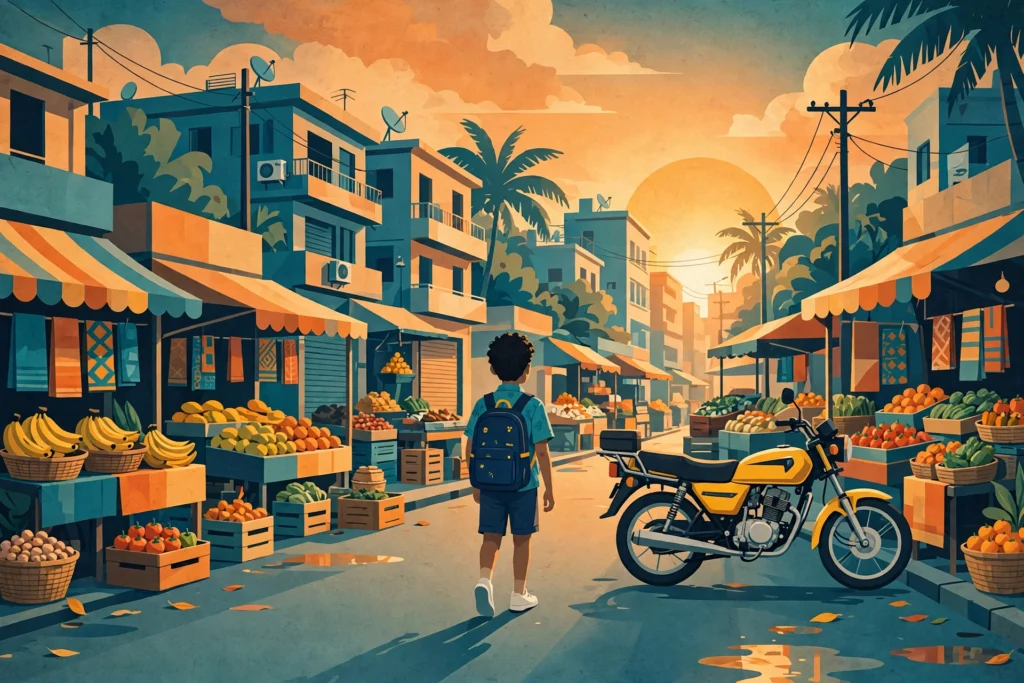
“It was really hard to eat three times a day. You eat twice a day at school; at home, you keep eating till night,” Zlatan told his son in the clip, a simple observation that carried the weight of a whole life story. He went on to point out the contrast in their daily journeys: his son travels to school by car, while he used to walk or hop on a commercial motorcycle, the okada, to get where he needed to go.
The video, which spread rapidly across social media on Monday, October 26, has been widely shared by fans who see in it a familiar Nigerian story: a parent who worked his way out of hardship, now determined that his children will never know the hunger he knew. Zlatan himself summed up the journey in a single line that has since been quoted across the internet: “I had to work my ass off to get here.”
A lesson in gratitude
What makes the video so affecting is not the hardship Zlatan describes, but the tenderness with which he describes it. He is not complaining, and he is not boasting. He is sitting with his child and explaining, plainly, that the life his son takes for granted was built on years of struggle, and that the comfort around them was earned rather than inherited.
For many Nigerians, the scene is instantly recognisable. The conversation between a parent and a child about how things used to be is a rite of passage in countless homes, and Zlatan’s version of it has resonated precisely because it is so ordinary. Parents across the country have shared the video with captions of their own, recalling their own versions of the same talk, the same contrast between then and now.
The singer said his difficult experiences had taught him valuable lessons and contributed to his appreciation of how far he had come in life. That sense of gratitude, rather than bitterness, is what has made the clip so shareable. It is a story about struggle, but it is told by a man who has already won the struggle, and who wants his son to understand the price of the victory.
From Abeokuta classrooms to the top of Afrobeats
Zlatan’s story is one of the most remarkable rise-to-fame tales in Nigerian music. Born Temidayo Omoniyi, he grew up with modest means and dreamed, as a boy, not of music but of football. He wanted to play for FC Barcelona, and he pursued that dream seriously until his academic and football careers both hit obstacles. He struggled in secondary school, particularly with Mathematics and Accounting, and after failing his WAEC examinations he faced the prospect of a year out of school.
It was during that uncertain period that music found him. A friend played him a song he had recorded, and Zlatan, curious, asked to be taken to the studio. He has said many times since that he never planned to become a musician. His father is a pastor, and he grew up playing drums in church, but a career in music was not part of the plan. The plan was football, and when football failed, music was the accident that became a calling.
His first song, by his own admission, was rubbish. But when his siblings heard it, they made him feel like Jay-Z, and the encouragement was enough to keep him going. He enrolled at Moshood Abiola Polytechnic in Abeokuta, where he juggled his studies with the daily struggle to survive, and where his talent began to attract attention.
The car that became a taxi
The turning point came in 2014, when Zlatan won the Airtel One Mic talent show. The grand prize was a car, and for a 19-year-old student with no money, that car became far more than a trophy. When there was no money for food, he would wait until nightfall and use the car to run a taxi service from Abeokuta to Shagamu, charging passengers 350 naira a trip.
It is a detail that has become part of his legend, and it is the detail that makes Monday’s video about eating three times a day ring so true. This is a man who knows, from lived experience, what it means to be hungry and to have to work through the night to eat. The car he won for singing became the vehicle, literally, that kept him fed while he chased the dream of singing for a living.
His major breakthrough came three years later, in 2017, when he featured Olamide on the hit single “My Body”. Zlatan has often described that collaboration as the turning point of his career, crediting Olamide with delivering what he called a life-changing verse. From there, his rise was swift: the “Zanku” dance move he created went viral around the world, his name became a fixture on the Nigerian charts, and he built Zanku Records into a label of his own.
Fatherhood at 25
Zlatan has spoken openly about how becoming a father at 25 changed his life. The birth of his son five years ago forced him to reassess everything, from his finances to his priorities. Raising a child in London proved costly, and he admitted at the time that he felt uncertain about his ability to keep up with the bills, given the unpredictable nature of a music career.
Some industry insiders doubted his long-term relevance, suggesting his popularity might fade after three years. In response, Zlatan adopted a more disciplined approach to money management. He cut back on spending, began saving for essentials such as diapers, and became more mindful of his financial obligations. The birth of his son shifted his priorities in ways that fans could see in his music and in his public persona: the street-hop star became, visibly, a family man.
That transformation is part of what makes Monday’s video so powerful. The man telling his son about hunger is the same man who once worried about affording diapers. The distance between those two moments is the story of his career, and he is now old enough, and secure enough, to tell it to the child who inspired it.
A wedding weekend, then a viral moment
The video arrived at the end of a momentous weekend for Zlatan. On Saturday, October 24, he married Davita in Lagos, in a ceremony that drew some of the biggest names in Nigerian entertainment. Davido led the groomsmen in Edo traditional attire, while Teni, 9ice, Bella Shmurda, Small Doctor, Phyno and a host of other stars were among the guests. Bracket, Yehmolee, Fola and Seyi Vibez were among those who performed at the wedding, and the celebrations dominated Nigerian social media all weekend.
That Zlatan followed the biggest weekend of his personal life with a quiet video about his childhood is, in its own way, characteristic. For all the glamour of the wedding, the story he chose to tell on Monday was not about the ceremony or the celebrity guests. It was about a boy who could not always eat three times a day, and a father who wants his son to know it.
Fans have noted the timing, too. The wedding marked the formal beginning of a new chapter in Zlatan’s life, and the video feels like a bridge between the life he came from and the life he is building. The couple’s young son, the subject of the video, is growing up in a world his father could not have imagined as a child, and Zlatan seems determined that the boy should understand both worlds.
Symbol of hope
Zlatan has never been shy about using his own story as motivation for others. His album “Symbol of Hope”, released in 2025, was built around exactly that idea: that his journey from humble beginnings to international success could inspire others from disadvantaged backgrounds to keep going. In interviews around the album, he said that fans regularly message him to say his music keeps them going, and that the album was his way of telling them that if he could make it, they could too.
The message has found an audience far beyond Nigeria. The Zanku dance became a global phenomenon, his collaborations have crossed continents, and his fan base spans the African diaspora. But the core of his appeal has always been the authenticity of the street-hop story: the sense that this is a man who has lived the life he sings about, and who has not forgotten it.
Monday’s video is the latest chapter in that story, and it may prove to be one of the most enduring. It is not a song, and it is not a performance. It is a father talking to his son, and in doing so, talking to millions of Nigerians who recognise their own parents in his words, and their own children in his son’s listening face.
A reminder for a generation
For many Nigerians, the story offers a reminder of the sacrifices parents make to give their children a more comfortable life than they experienced. In a country where economic hardship is a daily reality for millions, Zlatan’s reflection is not an abstraction. It is a lived experience that countless families share, and his willingness to talk about it publicly has given that experience a voice.
It is also a reminder that success, however glamorous it looks from the outside, is built on foundations that are often invisible. The wedding guests, the hit songs, the sold-out shows and the record label all rest on the years when a young man drove a taxi through the night in Abeokuta so he could eat. Zlatan’s video does not ask for applause for that journey. It asks only that his son, and by extension all of us, remember it.
As the video continues to circulate, the comments underneath it have become a chorus of shared memories, with fans posting their own stories of childhood hardship and parental sacrifice. In that sense, Zlatan has done something more valuable than going viral. He has started a conversation, one family at a time, about where we come from and what we owe to the people who got us here.
Source: GistReel, Newsunplug, TV360 Nigeria, P.M. News.