
Fireboy DML Reclaims Online Taunts With Fiery Fifth Album ‘ZUKO!’: Tracklist, Features and the Meaning Behind the Title
Afrobeats superstar Fireboy DML has officially entered a bold new era with the release of his fifth studio album, ZUKO!, a 13-track project that arrived on October 16, 2026, via YBNL Nation and EMPIRE — and the story behind the album’s title may be the most talked-about part of it.
The singer, whose real name is Adedamola Adefolahan, revealed that the album takes its name from Prince Zuko of the animated series Avatar: The Last Airbender — a nickname that rival fans once used online to mock him. Rather than running from the taunts, Fireboy reclaimed the name and turned it into the centrepiece of his most conceptually ambitious project yet.
Clocking in at roughly 40 minutes, ZUKO! pairs the YBNL Nation hitmaker with an international roster of collaborators, including Nigerian star Lojay, Jamaican dancehall heavyweight Masicka, Nigerian singer Judah Earl, and South African acts JAZZWRLD and Thukuthela. The album appeared on Apple Music Nigeria late on October 15 and has already racked up millions of streams across major platforms.
From Online Trolling to Artistic Triumph
Few album titles in recent Afrobeats history have a backstory as compelling as this one. For years, rival fan bases on social media used “Zuko” as a mocking alias when discussing Fireboy, drawing on the complex character from Avatar — a figure defined by exile, anger, identity struggles and eventual redemption — apparently to avoid being detected while dragging him.
Instead of ignoring the trolling or firing back with insults, Fireboy did something far more interesting: he claimed the name.
“Zuko came from social media, it’s a slander name that rival fans call me as an alias so I don’t find out they’re talking about me,” he explained in a recent interview. “They have been trolling me with this name for years, but it sounded really cool to me, like the name of a passionate, strong character. It fits the persona I’m trying to represent.”
That decision frames the entire era. By naming his album after an insult, Fireboy transformed years of online ridicule into a statement of strength, self-awareness and artistic control — a move that fans and commentators have widely praised as both clever and deeply confident.
It’s a powerful narrative: the bullied becoming the banner-bearer, the taunt becoming the triumph. And it sets the thematic tone for a record obsessed with identity, growth and redemption.
Inside the Tracklist: 13 Songs, Zero Filler
ZUKO! opens with “DEAR FATHER,” which features Judah Earl, before moving into “BY FIRE!” and “CLAAT!” — the latter featuring Masicka. Lojay joins Fireboy on “GODDESS,” while JAZZWRLD and Thukuthela share “IMALI.” The remaining tracks are “C’EST LA VIE,” “ONE MAN REGIMENT,” “KILOWI,” “ONAZO!,” “SEX LOVE UNDERSTANDING TRUST,” “LIGHT OF DAWN,” “MIMI NAWE,” and the closing track, “FIGHTING.”
Two of the songs, “CLAAT!” and “IMALI,” had already been issued as singles before the full album arrived, giving fans an early taste of the project’s range. “CLAAT!” leans into dancehall energy alongside Masicka, while “IMALI” dives deep into South African 3-step Afro House rhythms — a bold sonic experiment for the singer known for his mellow, melodic Afrobeats.
The collaborations reflect Fireboy’s increasingly global ambitions. Bringing together talent from Nigeria, Jamaica and South Africa, the album positions him as an artist comfortable building bridges across African music scenes and beyond.
“This project is about growth, discovering new sides of myself and pushing my creativity beyond what people have come to expect from me,” Fireboy said of the album. “ZUKO represents a new chapter in my journey, both as an artist and as a person.”
The South African Connection: Imali and the 3-Step Experiment
Perhaps the most sonically adventurous moment on the album is “IMALI,” Fireboy’s collaboration with South African acts JAZZWRLD and Thukuthela. The song ventures into three-step Afro House territory — a tempo and texture quite far from the soft, romantic songwriting that built his name.
The move fits a wider pattern of Nigerian and South African scenes trading sounds more freely over the past few years. Amapiano’s global takeover proved that Southern African rhythms could travel, and now artists like Fireboy are exploring even deeper into the region’s sonic landscape.
For longtime listeners who fell for his velvety romantic songwriting, “IMALI” may be a surprise — but it is exactly the kind of surprise that suggests an artist refusing to stand still. Other pre-album singles like “Dopamine” and “Story” had already hinted at a record that would swing between familiar Fireboy territory and fresh regional influences.
The Striking Visual World of ZUKO!
The album’s rollout has been as visually striking as it is musically ambitious. Teaser visuals place Fireboy in a crimson suit with gauze-covered head and hands, drifting along deserted roads or seated in movie-like shots that hint at wounds healing and fury held in check.
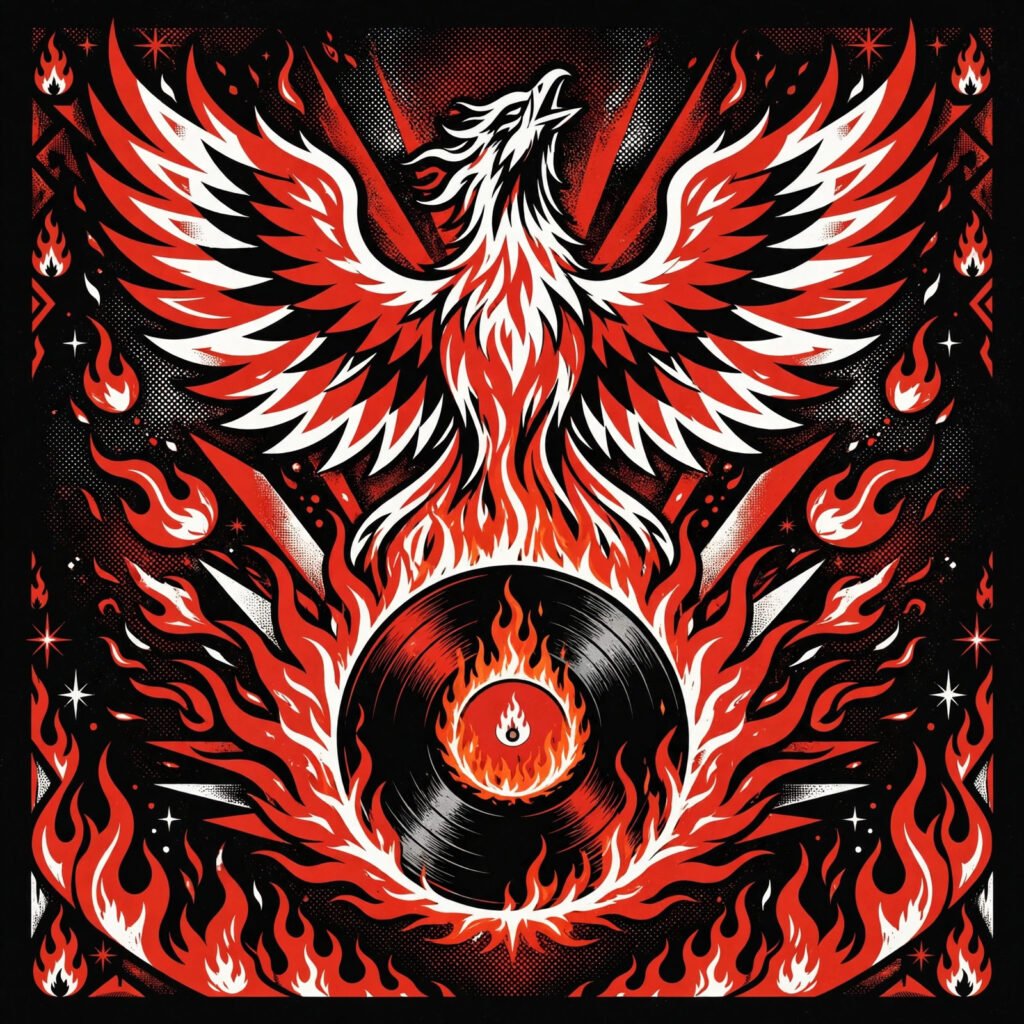
He has described the look as reflecting “dark gritty anger, an emotion that wasn’t in any other of my projects before,” often expressed through black leather and a red-black-and-white colour scheme. A “Red Couch Sessions” video released days before the album further immersed listeners in this brooding new world.
Alongside the album, Fireboy released the official music video for “ONE MAN REGIMENT,” which extends the album’s cinematic direction through black-and-white imagery, bold red accents and themes of transformation.
It is a deliberate reinvention of his visual identity — a departure from the softer aesthetics of his earlier eras, and a signal that this album represents something harder, sharper and more defiant.
A Discography of Remarkable Consistency
ZUKO! arrives two years after adedamola (2024), the project that put his given name front and centre. That album followed an impressively steady album cadence: his 2019 debut Laughter, Tears & Goosebumps, Apollo in 2020, and Playboy in 2022.
That consistency — a full album every year or two for nearly a decade — is rare in an industry where many artists struggle to release even a second project. Fireboy has managed to evolve his sound with each release while maintaining the melodic sensibility and songwriting craft that made him a star.
The journey from his 2019 breakthrough to global stardom has been nothing short of remarkable. His rise accelerated dramatically when “Peru” exploded in 2021, picking up a remix with Ed Sheeran that introduced him to audiences far beyond Africa. Since then, he has solidified his position as one of Afrobeats’ most important voices.
Why ZUKO! Matters for Afrobeats
ZUKO! arrives at a fascinating moment for Nigerian music. The industry’s biggest names are increasingly competing not just with each other, but on the global stage — and the album’s international collaborations reflect that reality.
By pulling in artists from Jamaica and South Africa alongside Nigerian talent, Fireboy is doing more than expanding his sound. He is participating in a broader Pan-African musical conversation, one in which the continent’s diverse sounds increasingly feed into and enrich each other.
The album also represents a mature artistic statement. The decision to name the project after an online insult and frame it around themes of redemption and self-discovery shows an artist who has thought deeply about his public narrative and decided to take control of it.
“In a recent interview with The Native, Fireboy described the project as a way of reminding himself who he is and showing audiences sides of his personality they may not have fully seen,” observers noted. That sense of revelation — of an artist opening up new dimensions — runs through every aspect of the album’s rollout.
Early Reception: Fans Are Feeling the Fire
Early reactions from fans have been overwhelmingly positive. The album’s millions of plays in its opening days suggest a strong commercial start, and social media has been flooded with praise for both the music and the boldness of the album’s concept.
Fans have particularly celebrated the title’s origin story, with many calling the reclamation of the “Zuko” nickname one of the smartest moves of Fireboy’s career. “Imagine your haters naming your album for you,” one fan wrote. “Legendary move.”
Critics have also noted the album’s sonic diversity, praising Fireboy for experimenting with new sounds while retaining the melodic identity that defines him. The dancehall and 3-step excursions are seen as risks that pay off, adding texture without diluting his core appeal.
What’s Next: The ZUKO! Era Unfolds
With the album now out, attention turns to what comes next. The “ONE MAN REGIMENT” video suggests a visual campaign is underway, and fans are already speculating about a tour to support the project.
Given the album’s themes of growth and transformation, live performances of these songs could become defining moments of Fireboy’s career. The cinematic visual language of the era seems tailor-made for the stage.
For now, though, the music speaks for itself. ZUKO! is Fireboy DML at his most conceptual, most experimental and perhaps most honest — an album that turns years of online mockery into a roaring statement of artistic intent.
The trolls called him Zuko. He called his album ZUKO!. Sometimes the best revenge is simply making great art.
For Nigerian music, moments like this matter. They remind fans that behind the streaming numbers and chart positions are artists navigating real pressure, real ridicule and real self-doubt — and occasionally turning all of it into something unforgettable.
Source: Okay News, QNC News, DancehallMag, BellaNaija, Afrobeats Global, NaijaPiz