
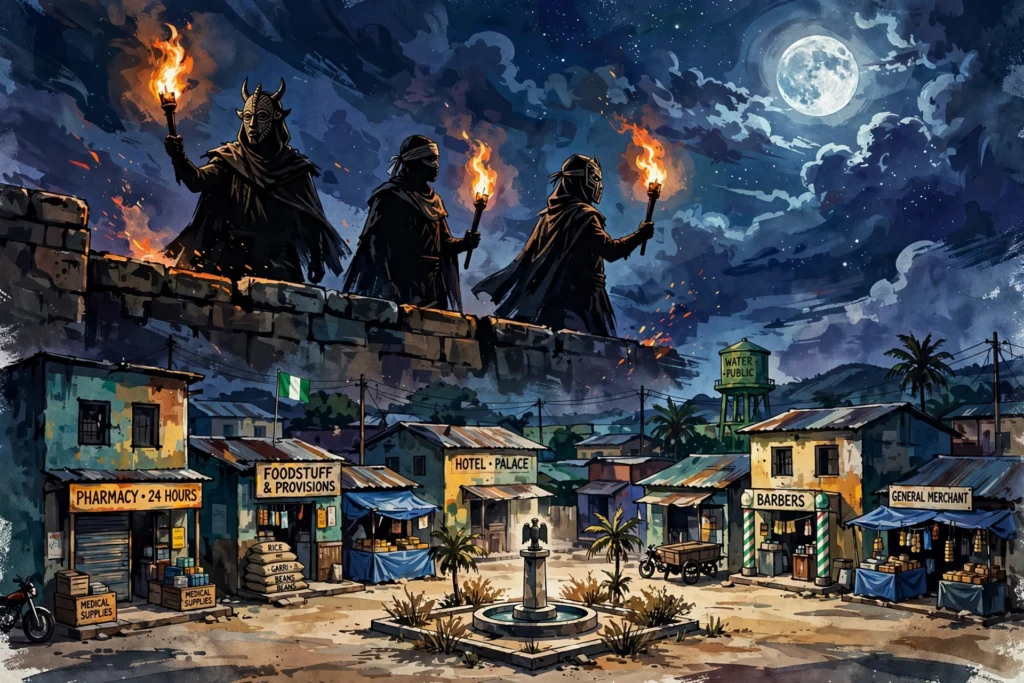
Issakaba: The Return Locks November 13 Cinema Date as Lancelot Imasuen Revives the 2001 Nollywood Classic After 25 Years
Twenty-five years after it redefined what a Nigerian action film could be, Issakaba is coming back to the big screen. Director Lancelot Imasuen has confirmed that the sequel, titled Issakaba: The Return, will open in cinemas across Nigeria on Friday, November 13, 2026 — exactly two and a half decades after the original became one of the most talked-about films in African cinema history.
The announcement was made during a press screening in Lagos over the weekend, and it has sent waves of excitement through Nollywood and among the millions of fans who grew up watching the original. The sequel brings back veteran actor Sam Dede as Ebube, the fearless leader of the legendary Issakaba Boys — the role that defined his career and gave the first film its unforgettable centre.
Months after the sequel’s trailer first surfaced online and reignited long-dormant excitement among fans, the confirmation of a firm release date has turned anticipation into a countdown. For an entire generation of moviegoers in Nigeria, Ghana and across West Africa, November 13 cannot come fast enough.
The Announcement That Set Nollywood Buzzing
Imasuen, fondly known in the industry as D’Gvnor, used the press screening to share the news that moviegoers have been waiting years to hear. According to reports from the event, the filmmaker revealed that the new film is finally ready for its cinematic bow after a long road from production to premiere.
The sequel was shot in Asaba, Delta State, in early 2024 — meaning the film has been in the works for the better part of two years before its release. Since the trailer dropped online months ago, eager moviegoers have been waiting for exactly this kind of announcement, and reports say the buzz around the screening was electric.
The press preview brought together cinema stakeholders, including Joy Odita, CEO of Blue Pictures Cinema, underscoring the industry’s commercial expectations for the release. When exhibitors show up in person for a screening, it is a sign that the trade believes a film can move serious numbers at the box office.
The director’s choice of Lagos for the announcement was fitting. The city is the beating heart of Nollywood’s cinema business, and a November release positions the film perfectly — arriving ahead of the traditional December cinema rush while still capturing the year-end moviegoing mood.
Sam Dede Returns as Ebube
The single most exciting detail of the announcement is the return of Sam Dede to the role that made him a legend. In the original Issakaba, released in 2001, Dede played Ebube, the fearless and charismatic leader of the Issakaba Boys — a group of vigilantes who took on violent crime with a mix of courage, strategy and traditional mysticism.
The performance became one of the most recognisable of his career and one of the defining roles of early-2000s Nollywood. For fans, Ebube was never just a character; he was a symbol of a time when Nigerian home videos dared to tackle the country’s most pressing problems head-on, with heroes who felt larger than life.
Dede himself broke the news of the sequel’s return to his followers earlier, announcing on his Instagram page on October 1 that the franchise was making a dramatic comeback. Alongside the announcement, he shared a trailer that gave fans their first proper look at the new production — and the clip immediately sent social media into a frenzy.
Stepping back into Ebube’s shoes after 25 years is no small feat. The character has lived in the public imagination for a quarter of a century, and expectations for how the older, battle-tested Ebube will be portrayed are sky-high. Dede’s return signals that the filmmakers are treating the legacy with the seriousness it deserves.
A Star-Studded New Cast Across Generations
While Dede anchors the film, the sequel surrounds him with an ensemble that bridges multiple generations of Nigerian screen entertainment. The cast announced around the press screening includes Nosa Rex, Francis Onwochei, Emeka Rising, Iyabo Ojo, Sir Alex Usifo and Chidi Mokeme.
The trailer, as reported by entertainment outlets, also showcases Nollywood heavyweights Regina Daniels and Iyabo Ojo alongside comedian and skit maker Mark Angel, BBNaija reality star Phyna, and veteran actor Chiwetalu Agu. Other names linked to the production include Charles Okafor and Itele the Icon.
The mix is deliberate and strategic. By combining veteran Nollywood royalty like Sir Alex Usifo and Chidi Mokeme with contemporary crowd-pullers like Regina Daniels, Phyna and Mark Angel, the production is clearly aiming to unite the original film’s loyal audience with a younger generation that may be discovering Issakaba for the first time.
Iyabo Ojo’s involvement is particularly notable. The actress remains one of the most bankable and talked-about figures in the Yoruba and English-language sectors of Nollywood, and her presence in the cast adds significant star power to the project. Regina Daniels, meanwhile, brings one of the largest social media followings in the industry, guaranteeing the film a built-in promotional engine.
The inclusion of comedy and skit-making stars like Mark Angel reflects how much the Nigerian entertainment landscape has changed since 2001. Today’s box office is driven as much by online influence as by traditional stardom, and the casting suggests the filmmakers understand the assignment.
How the Original Issakaba Was Born
At the press screening, Imasuen took time to recount the remarkable origin story of the original film — a tale that has become part of Nollywood folklore. According to the director, the idea for Issakaba took shape after the success of his earlier film, The Last Burial, which was produced by the late Jude Chukwuka Emelionwu of Kas-Vid International.
With The Last Burial making waves, Imasuen’s attention was drawn to the activities of the Bakassi Boys in Aba — a vigilante movement that had emerged in south-eastern Nigeria amid growing concerns about armed robbery and insecurity. The real-life drama of communities taking security into their own hands struck him as powerful cinematic material.
He called a script conference with writer Reginald Ebere, and together they began discussing casting and characterisation. That was how Issakaba was born. The film was originally titled My Town before it became the action epic audiences remember.
Released in 2001, the original Issakaba drew directly on the real-life vigilante movements of the era. Its mix of explosive action, vigilante justice and traditional mysticism struck a nerve with audiences living through a period of intense insecurity. It became a defining Nollywood action title and one of the most talked-about African films of its time.
The film’s popularity extended far beyond Nigeria’s borders. In Ghana and across West Africa, Issakaba became a cultural phenomenon, with its action sequences and portrayal of community justice making it a memorable title among audiences throughout the sub-region. For many fans outside Nigeria, it was their introduction to the raw energy of Nollywood action cinema.
“Security Is Local”: A Message More Urgent Than Ever
Beyond the action and nostalgia, Imasuen used the screening to restate the message at the heart of the franchise — and to argue that it has only grown more relevant with time. In his words, the original film argued that security is local, calling for traditional rulers, local governments and communities to be actively involved in protecting their people.
“Issakaba said security is local. Let traditional rulers, local governments and communities be involved in securing their people,” the director said at the event.
He described the 25 years since the original’s release as years of courage, boldness and deep thinking in the push for a safer society. The implication is clear: the evils the Issakaba Boys fought in 2001 have not disappeared — they have evolved, and the film’s central argument about community-driven security deserves a fresh hearing.
Where the first film dealt with armed robbery, assassins and political violence, the sequel arrives in a Nigeria grappling with kidnapping, banditry and terrorism as the current-day equivalents. The characters are returning to a familiar world, but the country they are returning to has changed considerably — a dynamic that gives the sequel genuine dramatic stakes beyond mere nostalgia.
The sequel, according to reports from the screening, recaptures the evil the Issakaba Boys fought 25 years ago — an evil that is still very much present today. That continuity is what makes Issakaba: The Return feel less like a cash-in and more like a statement: the fight the original depicted was never really finished.
The Road to November 13
The journey to the release date has been a long one. Principal photography was completed in Asaba in early 2024, and the production is backed by Lancelot Imasuen Media Network Limited, LIAM Studios, WithinDlens Limited and Laho Music Worldwide Studios Limited.
Winnerman Utomi came on board as executive producer during production, describing the film as his first major movie project and saying his involvement was driven by a desire to tell African stories that could travel beyond Nigeria. That ambition — to make a film rooted in Nigerian realities but built for a global audience — reflects how far Nollywood’s aspirations have come since the straight-to-video era of 2001.
The official trailer, released in October, brought the franchise firmly back into active conversation, giving audiences their first substantial look at the new production and its expanded cast. The reaction was immediate: fans who grew up on the original shared the trailer widely, while younger viewers encountered the Issakaba legend for the first time.
The November 13 date is significant in more ways than one. It lands exactly 25 years after the original’s era, and it positions the film as one of the biggest pre-December releases of the year — a slot that has proven lucrative for major Nollywood titles looking to avoid the crowded Christmas corridor while still benefiting from the festive season’s moviegoing appetite.
What This Means for Nollywood
The return of Issakaba is part of a broader wave of Nollywood revisiting its classics. From faith-based remakes to sequel announcements, the industry is increasingly mining its own history for stories with proven emotional resonance — and audiences are rewarding the strategy at the box office.
But Issakaba: The Return carries a particular weight. The original was not just a hit; it was a cultural document of a specific moment in Nigerian history, when communities confronted insecurity with their own hands. Its return invites a national conversation about how much — and how little — has changed.
For Sam Dede, the film is a homecoming to the role that defined him. For Lancelot Imasuen, it is a chance to complete a story he started a quarter of a century ago with the full resources of modern Nollywood behind him. And for audiences, it is an invitation to return to a world they never really left.
Come November 13, cinemas across Nigeria will find out whether the Issakaba Boys still have the power to hold a nation spellbound. If the frenzy greeting the announcement is anything to go by, Ebube’s return will be one of the defining cinema moments of 2026.
Source: QNC News, Vanguard, Asaase Radio, NollywoodCV, Graphic Online, Legit.ng